Application help for commercial floor-care teams Selection worksheets and maintenance notes
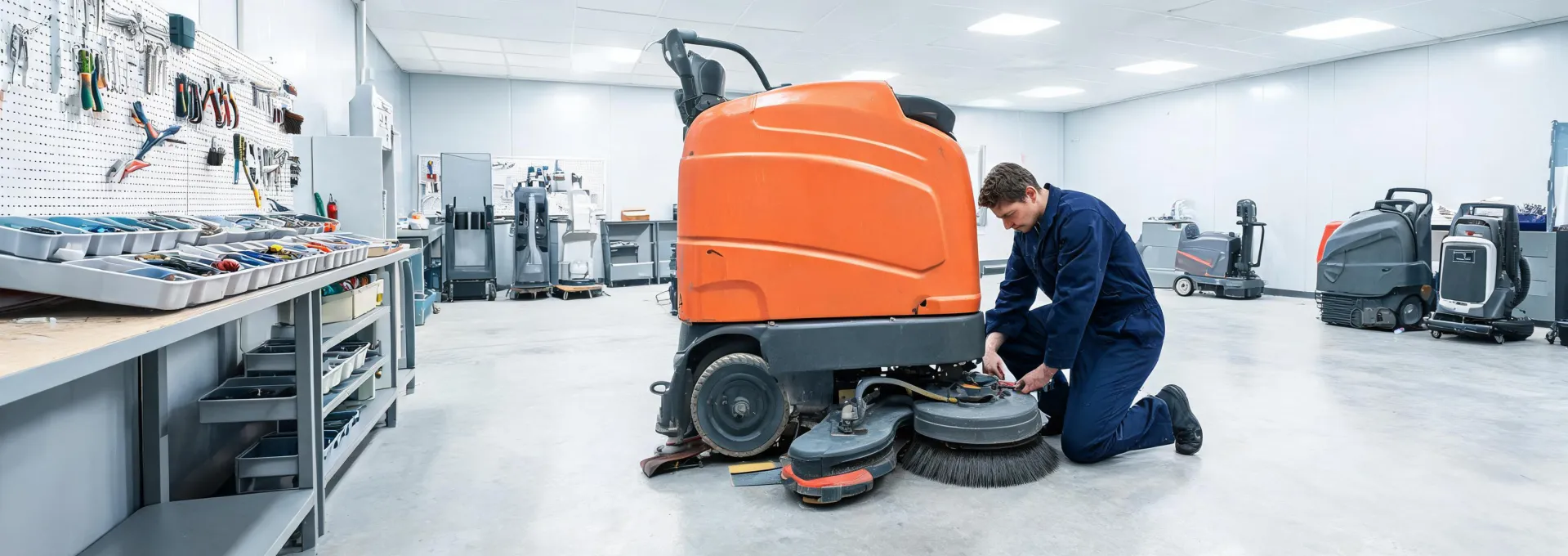
Service technician inspecting a commercial floor scrubber
A support path you can explain to the whole team

Clarke service guidance follows the machine through its working day

Selection is one decision; uptime depends on commissioning, operator habits, wear-item checks, charging or cord management, and a maintenance plan that fits the facility's schedule.

Three connected conversations

Support begins before the machine arrives

01

Application review

Measure the route rather than relying on total building area. Note minimum aisle width, tight turns, door thresholds, ramps, elevators, drains, storage, and the distance to fill and dump points. Record the dominant soil and any surface finish that limits brush, pad, or chemistry choices.

02

Operator handoff

Confirm pre-use inspection, solution filling, recovery-tank cleaning, squeegee checks, debris removal, and the correct shutdown sequence. A handoff should use the site's real route so the operator experiences turns, transitions, and congested areas before the first production shift.

03

Maintenance planning

Map daily, weekly, and condition-based tasks to accountable roles. Blade wear, brush or pad condition, hoses, filters, battery care, cords, and recovery performance need visible checkpoints. Parts availability and service access should be reviewed against the facility's acceptable downtime.

A repeatable route to deployment

Four checkpoints from floor walk to follow-up

The sequence creates a record that operations, procurement, and maintenance can review together.

  1. 01

    Document

    Capture surface, soil, dimensions, access, shift length, water points, power, and recovery expectations.

  2. 02

    Shortlist

    Compare machine format, working width, tank strategy, power arrangement, and service access.

  3. 03

    Trial

    Run a representative route and record time, refill stops, turning, water pickup, and finish condition.

  4. 04

    Handoff

    Set operator checks, storage, charging or cord practice, cleaning steps, and maintenance ownership.

What a site review can and cannot settle

A representative trial can show maneuverability, route time, visible soil removal, solution usage, and water recovery under the tested conditions. It cannot guarantee identical results when the floor finish, chemical, pad, soil load, operator pace, or maintenance condition changes.

Runtime estimates depend on battery condition, brush pressure, accessories, temperature, travel pattern, and idle time. Published specifications are a starting point; the operating brief and trial record are the decision evidence.

Prepare the next conversation

Bring the route, not just a model number

Describe the most constrained aisle, the most difficult soil, the available cleaning window, and who will perform daily care. Those details create a useful starting point for Clarke guidance.

  • Minimum clear width and tightest turn
  • Floor material and current finish
  • Typical and worst-case soil
  • Fill, dump, storage, and power access