Start with constraints
Surface and workflow define the selection problem.

Professional floor care is a connected operating system: surface, soil, method, machine, operator, maintenance, water, power, and time. A useful recommendation respects all nine rather than isolating a headline specification.
This site presents Clarke through an advisor's lens. It helps facility teams frame better questions, compare formats without hiding trade-offs, and prepare a representative trial before committing to an operating plan.
An equipment discussion can look straightforward on paper until a site walk reaches the narrow doorway, sloped transition, rough expansion joint, congested checkout lane, or distant dump point. Those details influence machine width, turning behavior, transport, recovery, and the number of non-cleaning minutes in a shift.
"The useful question is not simply how many square feet the machine can cover. It is how consistently the team can complete this route, recover the water, care for the machine, and return it ready for the next shift."
The Clarke approach represented here turns those observations into a written brief. A 60-minute route review can document minimum width, floor transitions, fill and dump travel, storage, charging or cord access, and the sections that carry the heaviest soil. The resulting shortlist is easier for operations, procurement, safety, and maintenance to evaluate together.
Surface and workflow define the selection problem.
Capacity, access, runtime, and maintenance are considered together.
The difficult turn or soil condition belongs in the trial.
Operators and maintainers receive the same checkpoints.

Control visibility, mounting and dismounting, sightlines, noise, vibration, hose access, tank cleaning, and blade inspection affect whether a procedure is repeated every shift. A machine is only one part of the result; the routine around it deserves equal attention.
Training should include setup, normal operation, a blocked recovery path, an incomplete pickup pattern, shutdown, and storage. That makes the response to common deviations observable rather than assumed.
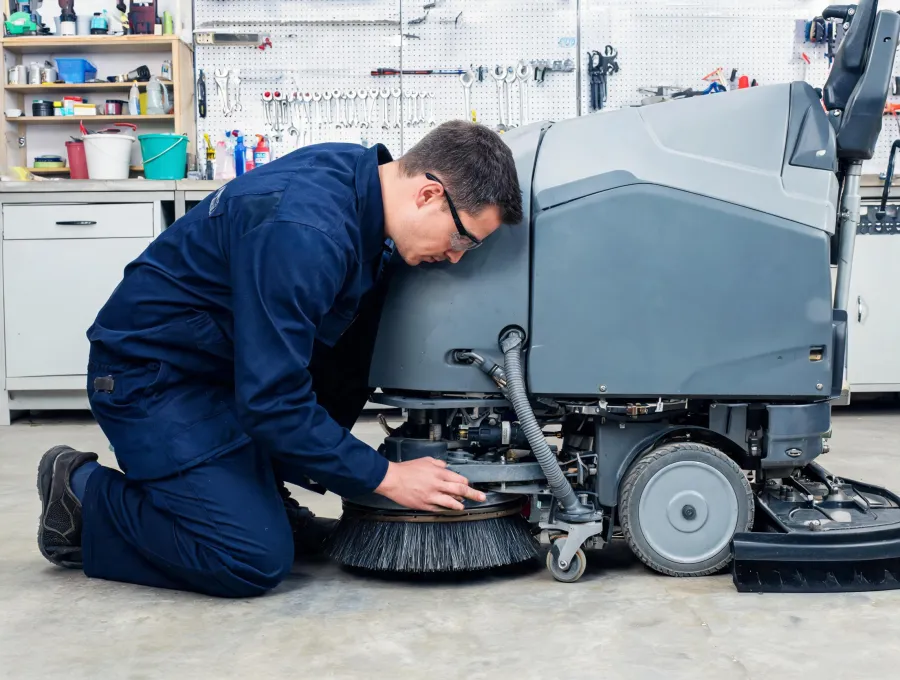
Wear items, filters, batteries, cords, fasteners, and recovery components need inspection intervals and ownership. Restricted access can turn a small task into avoidable downtime, while an undocumented daily cleaning step can reduce pickup before a component has actually failed.
Clarke guidance should be checked against the exact machine documentation and local service arrangement. This site provides a preparation framework, not a substitute for model-specific manuals, safety instructions, or trained technical service.
Use the application brief to describe the route, soil, operating window, and maintenance reality. A focused conversation begins with facts your team can verify.