Application help for commercial floor-care teams Selection worksheets and maintenance notes
Commercial cleaning equipment working across multiple facility zones
Application conditions shape the shortlist

Clarke floor care across six working environments

Each setting changes the balance among maneuverability, productive width, soil removal, water recovery, noise, runtime, and access to daily care.

Look past the building label

Define the route inside each environment

The cards below identify a typical decision frame, not a universal machine prescription. The actual floor and operating method must be reviewed.

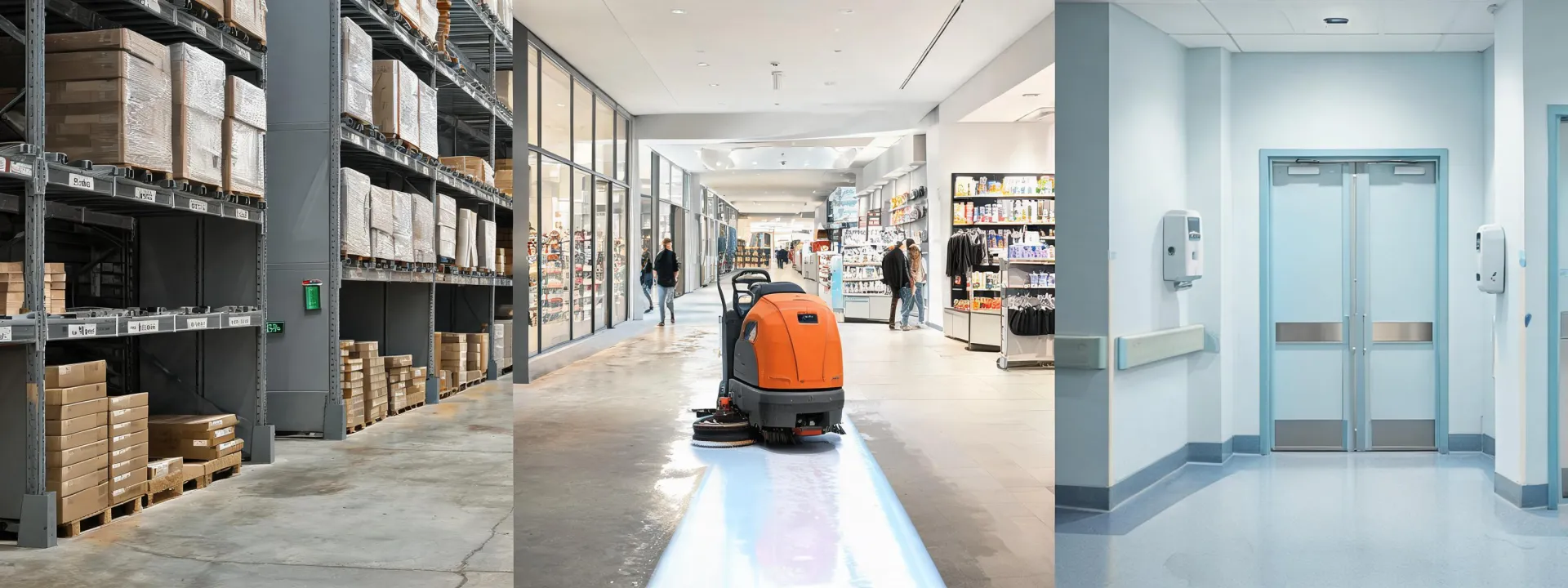
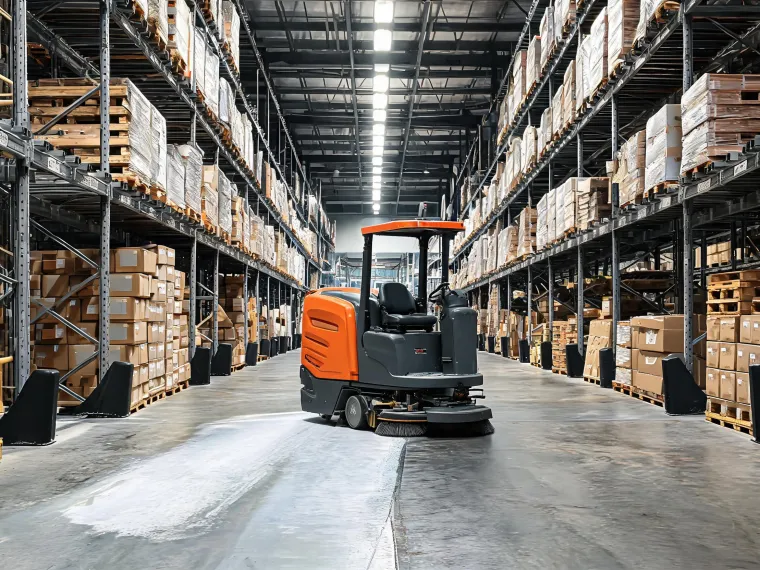
Warehouse aisle floor cleaning

Warehouse & Logistics

Open lanes favor productive width, but dock debris, rack ends, cross traffic, expansion joints, and long travel to water points can change the effective route rate.

Review: turning envelope, debris control, refill distance, operator visibility.
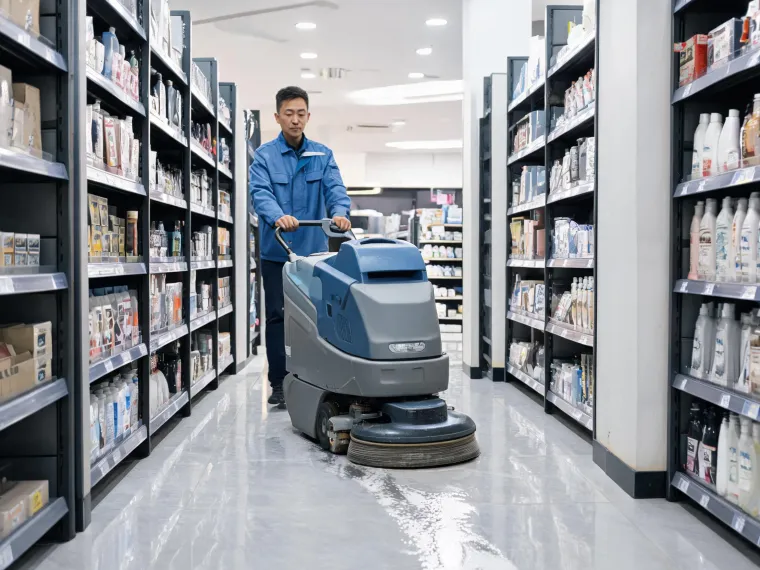
Retail floor cleaning before opening

Retail

Fixtures, displays, public visibility, mixed surfaces, and short pre-opening windows reward compact control and predictable water pickup more than nominal area alone.

Review: aisle width, noise, edge access, finish sensitivity.
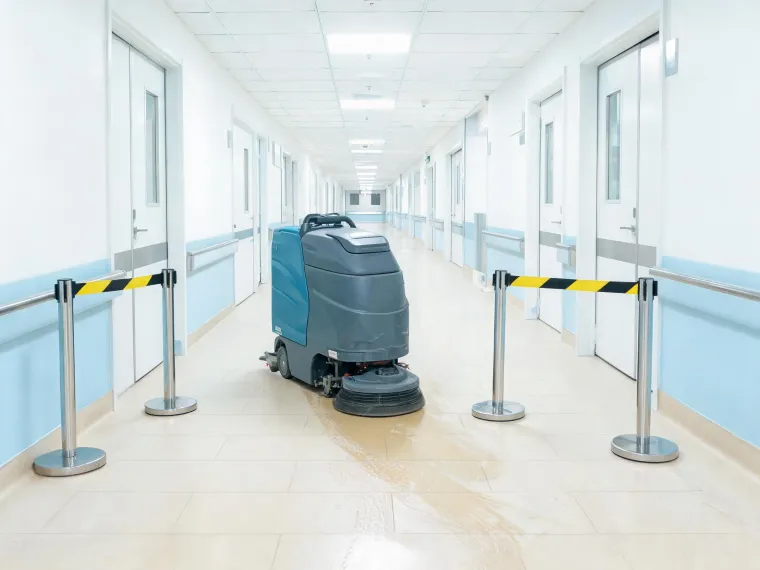
Healthcare corridor floor cleaning

Healthcare

Controlled routes, pedestrian separation, quiet periods, cleanable equipment surfaces, and reliable recovery support a disciplined procedure around the machine.

Review: zoning, noise, recovery, training, approved chemistry.
Education facility floor cleaning

Education

Corridors, cafeterias, entrances, gyms, and classrooms create different soils and access patterns within one property. Transport and storage may matter as much as cleaning width.

Review: transitions, storage, cord or charging access, seasonal soil.
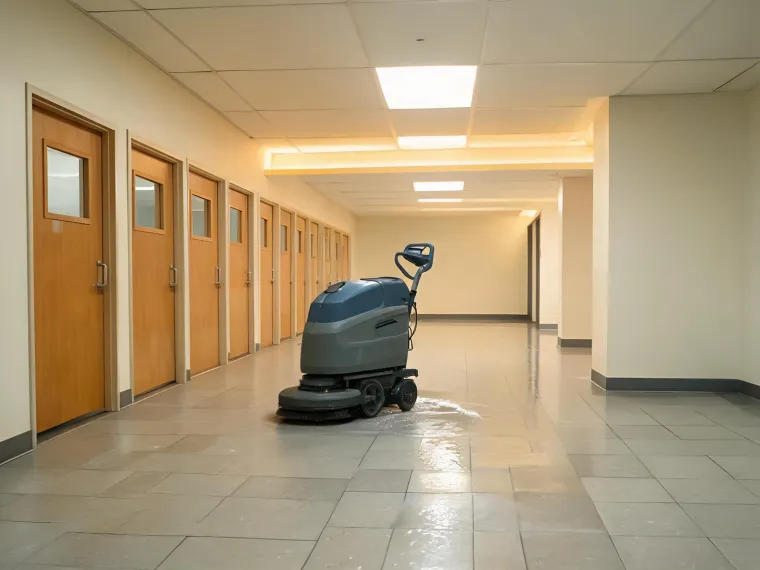
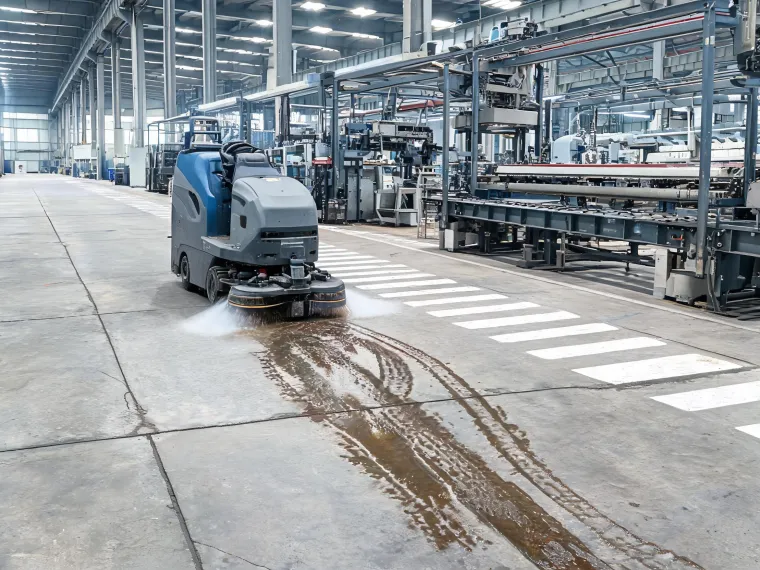
Manufacturing plant floor cleaning

Manufacturing

Tracked process soil, chips or debris, floor joints, oils, pedestrian lanes, and production schedules require method control before additional brush pressure is considered.

Review: soil classification, pre-sweep need, pad or brush, safety boundary.
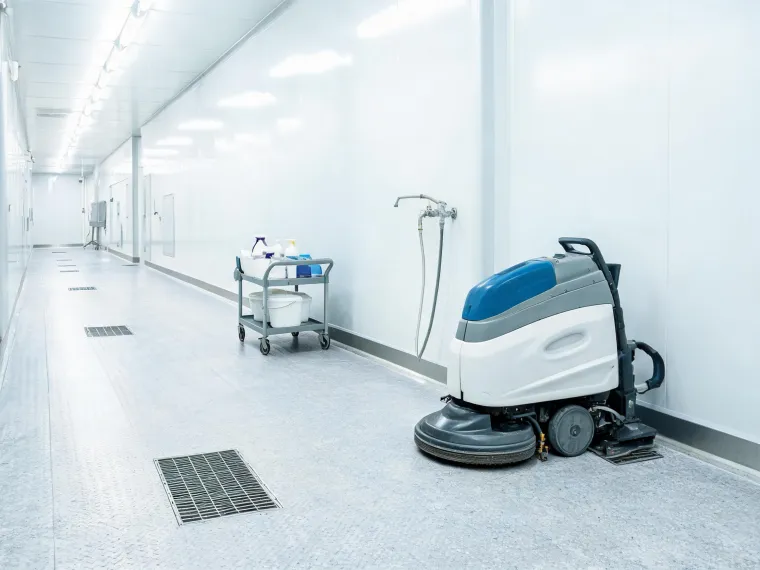
Food operation wash-down floor area

Food Operations

Textured surfaces, wet conditions, drains, zoning, residue, and site hygiene procedures influence brush selection, recovery, cleanability, and where equipment may be used.

Review: site sanitation plan, surface texture, drainage, approved method.
5route inputssurface, soil, space, time, support
3trial phasessetup, representative run, post-use check
1worst-case zoneincluded so the easy aisle does not decide alone
24 hreview pointinspect the machine and floor after the trial routine

Two trade-offs to document openly

Capacity versus access: larger solution and recovery capacity may reduce refill stops, yet increases footprint, weight, turning requirements, storage demand, and transport constraints. Aggression versus surface protection: greater brush pressure or a more aggressive pad may improve removal under one condition while increasing wear, finish risk, power use, or operator correction under another. The trial method should hold chemistry, pad or brush, pace, and test area constant before comparing results.

Test the hard part of the route

Build a Clarke application brief around observable conditions

Bring a measured aisle, representative soil, floor specification, operating window, and the people responsible for operation and maintenance.